Unknown's avatar

About gutenbergsson

A blog of books, publishing, technology, authors and the history (and future) of the printed word.

Ion Audio’s Book Saver: Digitize Your Library!

So, what’s to be done with all those books cluttering up your apartment/house? 

You ditched your C.D. collection years ago, converting everything to digital and loading up your iPod, but those pesky books,  they’re everywhere!  From the bedroom to the living room, you’re using them as coasters, as an end table, maybe to even out an off kilter table.  Hell, there’s even a couple sitting on the back of the toilet tank!

What can you do? 

Well, lucky for you, there’s no need to go to such extremes.  The good folks at Ion Audio have the answer to your problem.  Scan it!

Debuting at the 2011 Consumer Electronics Show earlier this month, the Ion Audio Book Saver promises to do for the world of books what the home P.C. did for your C.D. collection. Simply put, it’s a super fast photo scanner, optimized to scan print and store it on an SD card in digital form.  From there, it’s a virtual hop, skip and a jump, and there you go, the book is now a pdf file on the computer available to be uploaded to your eReader of choice.  Ion Audio claims their scanner can scan 2 pages per second (they claim similar products can only scan one page every seven seconds) using two cameras and a flash while the book sits comfortably in an angled cradle.  The only thing that slows down the process is the operator; pages do have to be flipped by hand after all.

Promoted as a quick way to convert your books, comics or magazines to a digital format, the Book Saver is projected to cost about $150 U.S. (and I would imagine slightly higher in Cdn funds).  It is also projected to cost the textbook publishing industry much more than that.  Vito Pilieci’s  January 13 article in The National Post outlines some of the copyright issues the advent of the Book Saver might have. 

Just like the music industry was ravaged by digital piracy, there are fears that the publishing industry might undergo the same trials.  After all, in the case of textbooks, why would everyone in the class pay full price for a textbook when they can pay their entrepreneurial friend (who has a Book Saver) a discounted price? 

However, this leads to the next question: what if the book is out of print?  Does the publisher really have a legal right to intellectual property that they’re not willing or able to disseminate?  I suspect the lawyers will be busy for years with questions of copyright and who owns what.

My point of view: I bought the book.  I own the book.  I’m going to convert the book and save myself some space around the house.


 (For a neat demonstration video of the Book Saver, check out this video on youtube)


Brother can you spare a dime (novel)?

“Hey guy, can I borrow your copy of The Girl with the Dragon Tattoo?”

“Um, no.  I bought it for the Kindle.”

“How about…”

“Nope. Kindle.”

“Well then, what about…?”

“Kindle!”

“Alright, I’ll be at the Library talking to that cute girl.”

I’ve had a Kindle for about eight months now.  I love it, it’s handy, and certainly saves a lot of space around the home office.  However, something has always annoyed me about their product.  You see, I love reading, talking about what I’ve read, and loaning out my favourite books to friends so they can enjoy them too.  Hard to do with a Kindle though.  At least ’til now.

Amazon has finally jumped on the bandwagon and relaxed their proprietary rules (somewhat).  Was it pressure from Google books?  Are they feeling the heat from Sony’s eReader?  Honestly, who cares?  It’s just nice to know that Kindle readers can now share content with their friends. As an aside, it’s also a great marketing tool for Amazon!

For their part, Amazon has made lending an book very similar to the library experience.  The lender can send an eBook to a friend for a period of two weeks, after which the recipient can no longer access the book.  Also, the lender of an eBook cannot access that book on their Kindle during the same time frame, just as if you were to physically loan out a book to a friend.

How does the recipient access their friend’s book?  Just download the Kindle app to your digital product of choice, whether iPad, iPhone, Android, Blackberry or PC/Mac.  The lender goes through a relatively simple process on their Kindle, and voila, they’ve loaned a book.

There are a couple of caveats:

  • Not all books are eligible to be loaned.  Amazon has left it up to the individual publishers to decide whether their material can be lent.
  • To read a loaned book, you must have the Kindle app.  (However, since it’s free, it shouldn’t be a big deal to download to whatever device you choose).
  • As of right now (January 2011), the lending option is only available in the United States. 

 Apparently the rest of the World will have to wait a bit longer.  Hmmph!

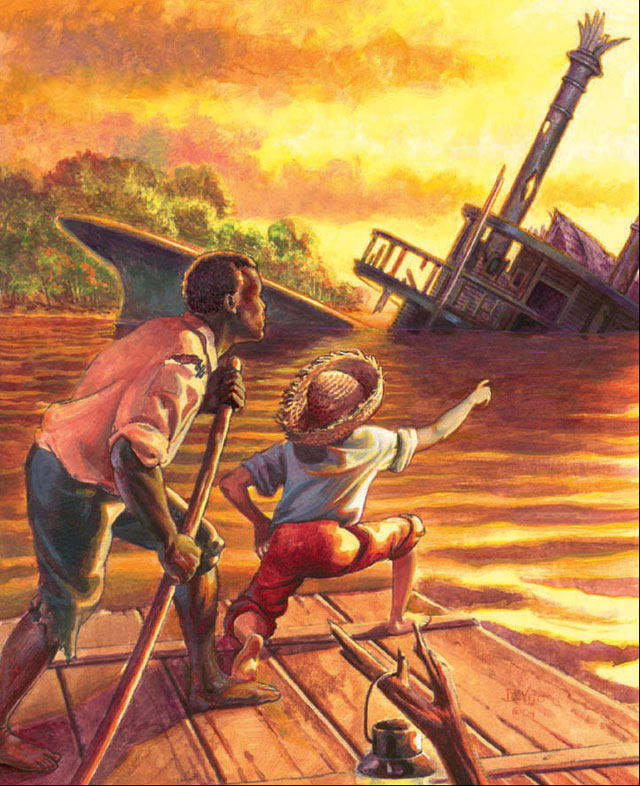
Huckleberry Finn gets his mouth washed out with P.C. brand soap.

As readers of this blog may know by now (all four of you!), I am not averse to messing with the classics.  Take some Jane Austen, add a zombie or two and all of a sudden you’ve got Pride and Prejudice and Zombies, a new and interesting take on an old story.  You may argue that it’s a violation of the original author’s intent, or a debasement of their art, but hey, as long as the original is around to be read in concert (or instead of) the re-imagining, well, to me it’s no harm, no foul.

Then again, sometimes people edit books for content, taking away from the original rather than adding to it.  Such is the case with Alan Gribben’s, Mark Twain’s Adventures of Tom Sawyer and Huckleberry Finn: The NewSouth Edition to be released in February.  In this revised version of the classic Twain novels, all references to the word “nigger” have been removed and replaced with the word “slave”. (note to readers: that will be the one and only time I use that word in this post…for illustration only)  It should also be noted that the word “injun” has been redacted from Tom Sawyer’s tale.  

Gribben explains away his tampering with the original in an interview with Publisher’s Weekly, in which he says,

This is not an effort to render Tom Sawyer and Huckleberry Finn colorblind…Race matters in these books. It’s a matter of how you express that in the 21st century.”

He goes on to talk of his discussions with various teachers and how many have become reluctant to teach the novel in the classroom because they felt the source material was not appropriate in this day and age.

For a single word to form a barrier, it seems such an unnecessary state of affairs,” Gribbens says. 

Attempting to correct this unnecessary state of affairs, he took it upon himself  to create a version of the classic more “accessible” to modern readers sensibilities and NewSouthBooks picked it up for printing and distribution.

And with that, sometimes we need to be reminded that the road to Hell is paved with good intentions.

Here’s the interesting thing about NewSouth Books: If you go to their homepage and click on the link About NewSouth Books, Suzanne La Rosa (the publisher) gives her insite into what they want to do as publishers:

We gravitate to material which enhances our understanding of who we are and which asks us to stretch in our understanding of others,” she says in a 2008 article with the Louisville Courier-Journal.

Really?  How is it enhancing the reader’s understanding of the ante-bellum South by censoring any reference to the attitudes and word usage of those times?  Twain wrote social commentary in the guise of literature, and challenged the reader to face ugly truths.  Slavery did exist, African Americans were the victims of a truly horrible slur that denigrated their very existence, and to my mind, it shows no courage whatsoever to gloss it over.  Courage would be to confront and examine the text and why Twain would feel compelled to add the “N” word to his tale. 

Tony Norman wrote a great article on the subject in the Pittsburg Post-Gazette this past Friday, in which he calls professor Gribben’s re-imagining,

a misguided attempt to rescue the novel from those who stupidly accuse it of racism“.

and, 

Despite its resemblance to a child’s adventure story, “Huckleberry Finn” is a dagger to the heart of white privilege and its all-pervasive cultural assumptions. That’s why the racists of Twain’s time despised the book. They knew it was a veiled attack. We’re too culturally self-absorbed to see what was obvious to them. We’re so hung up on a word we miss the liberating speeches.”

That’s the point now, isn’t it?  Gribben and his cohorts can’t see the forest for the trees. 

In the final analysis, this is all probably a flash in the pan.  After all, there are numerous editions of Twain’s books on the market, so it’s not as if you can’t find the original text.  As for Alan Gribben, his censorship comes from a desire to do what he thinks is the right thing.  However, if you edit on the basis of what might offend, what comes next?  Christopher Howse asks that same question in the Telegraph.  No more Merchant of Venice because it could be offensive to Jews? 

And in that vein, how long might it be before history texts are edited for content?  Will the Holocaust simply become, “that bad thing that happened?” 

Concentration camp becomes “re-education centre?”

Nazi becomes “misguided soul?”

I exaggerate for effect, but really, how is this much different? If we can’t examine the past in the context with which it happened, then what really can we learn from it?  Rright about now I would love to hear what Mark Twain would have to say on the subject.  I suspect it would be interesting.

Harper Collins has Stickybits!

Okay, it’s not what you think.

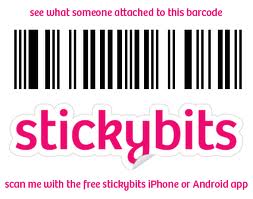
First, a little background.  stickybits is another in a long line of social media apps such as twitter (Everyone’s thoughts! All the time!) and foursquare (Hey people, look where I am!) that actually has  potential to be the next big thing in marketing. 

With stickybits, the user can scan the barcode of a product (whether it be a can of pop, an article of clothing, or even one’s own business card) and attach a personalized message, link to a video, enter a contest related to the product, or link to one’s resume or social profile on a website like  LinkedIn.  The possible uses of stickybits are endless both for consumers and producers.  Call it a more versatile version of Sprouter, Twitter’s entrepreneurial big brother.

So, what does this mean for the world of publishing?

Well, as of last month, Harper Collins Canada has made a foray into the world of social media marketing in the form of an interactive contest using stickybits technology.  They’ve asked consumers to discuss and comment on four of their titles using the stickybits app with the carrot being a variety of prizes for participation. (See this article in Quill and Quire for more detail on the contests)  Call it a pilot project of sorts.

However, as I see it, this could offer huge potential for authors and readers alike, notwithstanding the free advertising for publishers.  Imagine being able to scan a barcode in a store and instantly have access to consumer book reviews, author Q & A’s, and maybe even video book trailers on your Ipod, Iphone or Android.


(For a great explanation of Stickybits and how it works, try “The Secret Lives of Objects: Stickybits turns Barcodes into Personal Message Boards” by Erick Schonfeld at TechCrunch)


Google challenges Amazon for ebook supremacy

Uh, oh.

Google’s on the move again.  Not content with being the foremost search engine on the web, nor the foremost video provider (Hello?  Youtube?), nor a young schoolboy’s best way to spy on that cute girl next door, nor dominating the email market…now they’ve decided to challenge Amazon’s dominance in the market of ebooks.

As of Monday December 6, 2010, Google has announced their plans to become the foremost provider of digital books in direct competition with Amazon.com.  With access to over 3 million current and out of copyright titles, they’re set to make them available (for a price) in a customer’s personal e-library (much like Amazon) and easily read on any internet ready device, whether it be phone, computer or ipod.  Surprisingly (?), while their titles will be compatible with most ereaders…the Amazon Kindle is not one of them.

So, what does this mean for your average eReader?  More access to out of print books? More variety in how they view these tomes?  More savings when choosing your next ebook?

Yes!  Yes! and um…maybe?

Amazon is not taking this lying down however, trying to block Google’s access to millions of out of print titles.  Should be interesting to see what happens. 

But seriously, if you want to take a look at the new Google bookstore, here’s your chance.

For further reading and an in depth story on developing Google/Amazon rivalry, Jefferson Graham’s article in USA Today is a must.

Monster Hunter International- Larry Correia

Monster Hunter International: Larry Correia (Baen Books, 2009; 713 pp.)

Owen Zastava Pitt is just your average mild-mannered accountant working in the finance department of a small firm in downtown Dallas.  Sure, he’s over 300 lbs of solid muscle and worked his way through school engaging in back street bloodsports, but still, he’s an accountant.  An accountant with your stereotypically angry boss.  Seems like nothing he does pleases Mr. Huffman, not even working late.  However, when Huffman calls Pitt into his office one night, Owen expects another irrational dressing down, not a company dinner.  Especially when Huffman has decided that the dinner is going to be Owen.

You see, Huffman’s developed a case of Hypertrichosis as the result of an encounter on a recent camping trip, and as a side effect, developed a hunger for human flesh.  However, Owen’s not about to send a memo to Human resources about Huffman’s behaviour, and thanks to Texas’ very liberal conceal and carry laws (and Owen’s very literal interpretation of  the second amendment), he takes matters into his own hands in the form of a .357 Smith and Wesson.  However, Huffman’s not having any of that, and owing to the fact that Owen generally doesn’t carry around silver bullets, things get a little hairy.  Luckily, the law of gravity is on Owen’s side, and his former boss ends up a Lycanthropic splotch on the pavement after a 14 storey fall from a window office.  Owen fares little better.  Hey, let’s see you go ten rounds with a werewolf and see how you feel afterward.

Cue hospital scene:

When Owen awakes from his injuries (five days later), he’s in the company of a couple of federal agents.  Their role…to either put a silver bullet in his head in the event that his blood tests come back positive for lycanthropy, or in the event that Owen’s not going to go all Wolfman next time the moon is full…to threaten him into signing a nondisclosure agreement.  After all,  it is the official policy of the American government that supernatural creatures do not exist.  The penalty?  Prosecution to the fullest extent of the law under the Unearthly Forces Disclosure Act.  However, shortly thereafter Owen is visited by Earl Harbinger, an associate with MHI (Monster Hunters International™), a for profit mercenary group along the lines of the infamous Blackwater.

Monster Hunter International has its own private army, dedicated to pretty much what their company logo says…hunting monsters and making the world safe for your average person…at a price.  Harbinger is both a founding member and head hunter of new talent, and he thinks Owen fits the bill.

As for Owen, he’s not got much else going on.  While still in the hospital he finds out that he’s been terminated from employment at the accounting firm (apparently he was in violation of their no weapons in the workplace rule) and shortly thereafter finds himself convalescing in his apartment and pondering his future employment prospects.

Luckily for Owen, when next Harbinger visits, he brings along Julie Shackleford, a member of Monster Hunters International™’s founding family.  She’s drop dead gorgeous, shares his fascination with all things ordinance (did I mention she’s gorgeous?), and wants to offer Owen a job.  Hunting monsters.  For profit.  She’s also brought along what could be termed his first pay cheque: $50 000 in government bounty for his first supernatural kill owed due to the P.U.F.F. act (Perpetual Unearthly Forces Fund) instituted by Theodore Roosevelt (something else you won’t read in the history books!).  Needless to say, that makes his choice simple, and he decides to sign on.

From there the action really takes off as the novel follows Owen’s training, integration into one of MHI’s hunting teams, and eventual first mission, which, if he doesn’t play his cards right, could be his last.  Oh, and might result in THE END OF THE WORLD.

But I’ve said too much.  Read the rest for yourself.

Cue review:

Monster Hunter International is written from Owen’s point of view, and the writing flows so that you get a great idea of his ideals and motivations.  He’s got a sense of justice and honour that may not be mainstream, but he sticks by his guns (both literally and figuratively) in any situation and shows a strong, unswerving character.  There’s no grey areas here.  The bad guys are bad (really, really bad), the good guys are good (except when they work for the government), and when the two mix, the result is explosive.

Monster Hunter International is not going to win any awards for high literature, but if you want a rip-roaring ride full of non stop action, violence and confrontations of the supernatural sort, it’s the book for you.  713 pages go by in a flash of silver bullets, Vampire Masters, Trailer Park elves, giant gargoyles, one extremely nasty conquistador, a prophecy that if fulfilled would open a doorway to another dimension and let loose the demons within…and young love.  Reading this book I was reminded of John Steakley’s Vampire$ (a great book in its own right) and why not?  They’re both about a group of mercenaries hunting down the supernatural both to keep humanity safe and for a crapload of money.  So, if you like a dose of guns, girls and gore, Monster Hunter International has it.

But wait!  There’s more!

MHI was published in 2009, and in the meantime Larry Correia hasn’t rested on his laurels.  The sequel, Monster Hunter Vendetta ,was released in paperback just this past September.  Larry’s also a blogger, and if you’re interested in reading about his work (and thoughts) you can check in with him at Monster Hunter Nation and read about his work on the third novel, Monster Hunter Alpha.

The Walking Dead Lurches From Page to Small Screen!

  “In a World ruled by the dead, we are forced to finally start living.”

The Walking Dead made its debut in 2003, and over the past seven years, writer Robert Kirkman and illustrator Tony Moore have crafted a World that Thomas Hobbes would appreciate…a World in which life is cheap: nasty, brutal and short.  The question they asked themselves in moulding this world: “How do people deal with extreme situations and how do those same situations change people?”  What better way to explore the psyche of society than to explore the reactions of everyday people to an event so horrifying and final that every societal norm we take for granted comes into question?

That event… Zombie apocalypse. 


Over the course of 13 graphic novels, Kirkman and Moore have introduced a variety of characters trying to deal with everyday life in a World that is no longer everyday.  Centered around Rick Grimes, formerly a police officer in rural Kentucky, The Walking Dead tells the story of a ragtag group of survivors and their quest not so much for answers as  for mere survival in what could only be described as life after the end of the world.  Rick becomes a natural leader in this world, and The Walking Dead chronicles his attempts to keep a small segment of society alive under impossible conditions.  His story contains every element of human nature, from courage and duty to  cowardice and treachery, love of life to suicide…pretty much every human emotion and quality…or  inferiority that one can think of.  Every  facet of the human condition (whether enlightened or banal) has been explored at one point or another within the series.


My favourite feature of  The Walking Dead?

You never know where it’s going to go.  No one is safe.  Whether a character has been there from the start, or is simply a plot device, any and all characters are expendable.  And that is simply refreshing.  No cookie cutter heroes and villains…simply humanity, with all the warts.


So, it was with great excitement that I found out the other day that The Walking Dead has been translated into an original television series, premiering on October 31st, 2010, (Otherwise known as Hallowe’en) on AMC 


Thank you Frank Darabont!


Chapters/Indigo gets serious about e-reader competition

Way back in July of 2010, Kobo Inc., a subsidiary of Indigo Books and Music, introduced the Kobo eReader as an inexpensive alternative to pricier eReaders such as Amazon’s Kindle.  Their thought process: that people would embrace a low-cost eReader even if it meant fewer features like WiFi.

Three months ago that must have seemed like a great idea.  What would happen though, if say, Kindle prices dropped to an equivalent level or they created a bare bones version that still contained WiFi?  Oh wait, they did.  Awkward.

So, after what must have been a panicked boardroom meeting, Kobo is releasing a wireless version of their eReader on November 1st, retailing at $149 Cdn.  However, big brother’s new Kindle retails for $139 Cdn.  Also awkward.

(note: Marketing Magazine’s article on the Kobo lists the retail price as $139 Cdn. but the Kobo website lists it at $149 as of this writing)

Night of the Living Trekkies-Kevin David Anderson and Sam Stall


  “They thought Space was the Final Frontier–They were wrong.”


Jim Pike is a man tortured by the events of his past.  An Afghanistan veteran in the throes of Post Traumatic Stress Disorder, Jim has seen the bloodiest aspects of war and no longer wants the responsibility that came with his service.  In fact, he doesn’t want any real responsibility whatsoever, haunted as he is by the loss of several members of his platoon.  So, security guard at the Botany Bay Hotel and Conference Centre in the lovely town of Houston seems like the perfect fit. After all, the worst thing he’s going to have to deal with this weekend is a bunch of Star Trek geeks attending the annual GulfCon Star Trek convention.  Or so he thinks…(cue ominous music)

Just down the road the  Johnson Space Centre has been put into lockdown mode and convention goers are complaining about poor to nonexistent cell phone reception.  Even the televisions seem to be on the fritz.  To top off his day, Jim’s supervisor is missing, half the staff hasn’t shown up for work, and his sister Rayna is coming to town, bringing along a motley collection of Star Trek fans such as:

  • Matt Stockard–Wunderkind software developer drunk on his own dubious fame and possible paramour of Rayna’s (at least in his mind)
  • Gary Severin–Matt’s nominal boss, a stereotypically obese Sci-fi nerd and the foil of Matt’s excessive personality (picture comic book guy in a trek outfit)
  • T’Poc—Matt’s executive assistant and the girl who’s looking to hook up with Jim while wearing a suggestive outfit from the Star Trek Mirror Universe.

During the course of the next several hours, Jim’s finely honed sense of danger (which he first exhibited in Afghanistan while on patrol with his squad) keeps going off, but he’s too overwhelmed with the staff disappearances and his desire to connect with his sister to listen to them.  That is, until his manager points out that anyone leaving the complex for a smoke…never comes back.  Things quickly degenerate from there to an all out battle to stay alive in a convention centre populated by what at first glance appears to be the living dead.  Jim soon comes to realize that things are not what they seem, they’re even worse, and that the monstrous hordes may have an extraterrestrial connection to recent events at the Space centre involving the Genesis probe.  Luckily, a NASA exobiologist by the name of Sandoval may have the answers to their dilemna…if only they can find him before the Zombies do.

In the course of rounding up Rayna and her friends and trying to find a safe haven within the Hotel complex to hole up and wait for help, Jim comes across a girl dressed in a slave outfit (a la Princess Leia from Return of the Jedi).  Strangely enough, she’s handcuffed to a bed with a video camera set up.  Leia (not her real name) got herself mixed up in a little Star Trek dominatrix video and like everyone else, just wants to get out of Dodge.  Add one Klingon with a Bat’leth,  a guy in a red shirt with the unfortunate name “Willy Makit” (sound it out phonetically and you’ll get the joke) and the carnage begins.

The authors of Night of the Living Trekkies have created a unique perspective  on the Zombie genre.  Rather than those horror novels that leave the explanation of the Zombie outbreak to the reader’s imagination, they come up with an explanation of Zombism that has a scientific element to it.  The pathogen is extraterrestrial, much like in the Andromeda Strain with one twist…this time those affected don’t stay dead. 

Anderson and Stall are clearly Star Trek fans and have jam packed their novel with references both obvious and obscure.  Each chapter title is an homage to the original episodes, and Jim Pike’s name is a subtle reference to both Jim Kirk and the Enterprise’ first captain, Christopher PikeEven Dr. Sandoval’s name is a reference to a character in the original series (spoiler alert!) with a similar problem. 

Night of the Living Trekkies departs from your usual fan fiction…it’s actually good!  With a fast pace and interesting (although predictible) cast of characters, Night of the Living Trekkies takes the reader on a bloody yet satisfying journey into the world of Star Trek fandom while adding more than a dash of horror to complete the picture.

Publisher Quirk books has engaged on a unique marketing campaign to promote this book, investing in a faux movie trailer on youtube to showcase their author’s work.  Here’s hoping a full length feature is in the future.

.

Oxford Dictionary (Print edition) just became a collectable.

Now what am I going to showcase on my coffee table?!

As of the third edition of the Oxford English Dictionary, the Oxford Press will no longer be making print copies available of the complete edition of their venerable dictionary, preferring to go digital and have it only available (in the full version) on-line.  Apparently it’s not commercially viable for the printer to actually “print” copies of the full dictionary…and the numbers bear that out.  Each copy of the Oxford English dictionary costs the buyer £750 (roughly $1200/Cdn) and has never been sold in numbers that make the Press a profit.  In fact, it’s always been subsidized by sales of the Oxford’s other publications. However, an online subscription costs £240/year (roughly $385/Cdn) and garners viewership of 2 million per month (granted, that’s not to say they have 2 million subscriptions!).

Harry Mount laments the death of the Oxford in an interesting article on the history of the Oxford in the Daily Mail (ironically in the on-line edition), decrying the loss of one’s ability to thumb through the dictionary looking for that unexpected gem you might otherwise not come across on-line.  My suggestion…a randomizer button.

The Washington Post also has a nice obit for the Oxford.


However, it’s not as if the Oxford is going to disappear from your local school or library.  There are no plans to stop printing the min-Oxford anytime soon and I’d like to think most schools would have both access to the internet and to this quintessential dictionary.

(Note:  Thanks to the UK Daily Mail for all statistics quoted above)