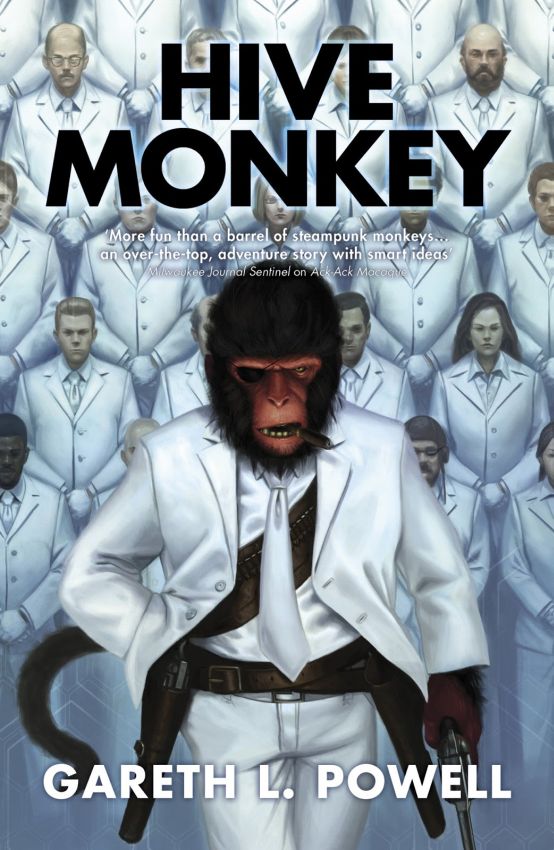
Hive Monkey-Gareth L. Powell

hive-monkey-gareth-l-powellIf joining the Gestalt meant an end to loneliness, he could see how they might find doing so attractive; but it wouldn’t work for him.  He’d still be the only monkey in a sea of apes; still just as alone, however many humans he had crawling through his head, chattering away about their human feelings, and human problems.

Reynolds could go fuck himself.

Source: Netgalley (review copy)

Publisher: Solaris Books

Publication Date: December 31, 2013

It’s been a year since the events of Ack-Ack Macaque and our simian anti-hero is finding life outside the game to be a bit of a reality check.  Back in the VR universe he was alpha primate, a virtually indestructible ball of wise cracking fur with itchy trigger fingers.  Never defeated, nigh indestructible, he took on all comers with ease and fought the good fight for King and Country with nary a thought of the future.  Released from his virtual prison, Ack-Ack managed to save the real world from the nefarious plans of Queen Alyssa Célestine and her cult of the Undying.  But that was a year ago, and now Ack-Ack finds himself lacking a purpose.  Without the constant excitement of eternal combat that his time in the game provided, he’s been reduced to piloting Victoria Valois’ airship Tereshkova from place to place and spending his spare time reminiscing the glory days while flying around in an antique Spitfire.  For a macaque of action, the doldrums of this new reality are taking a toll, as is the realization that he’s an anomaly.  As the only sentient monkey on earth, he feels very much alone.  Alone—and horny.

When approached by a spokesman of the Gestalt, a cyber-cult whose members have wirelessly connected their gelware to create a collective “hive mind”, he’s torn between two thoughts.  The first—to accept their offer in the hope union with the Gestalt might alleviate his loneliness.  The second—to tell them to go fuck themselves while flinging some poo.  Finding the balance, Ack-Ack rejects their overture with a sucker punch and assumes that’s all she wrote.  Cultists being cultists however, they refuse his refusal, pursuing his membership with a most cult-like determination.

Meanwhile, a down and out Science Fiction writer by the name of William Cole is struggling to cope with the loss of his wife Marie and failing horribly.  He’s in a downward spiral, fueling his grief with drugs and alcohol.  But when someone takes a shot at him outside his apartment, his instinctive impulse is still self-preservation, all flight—no fight.  Hours later he’s in Victoria Valois’ cabin aboard the Tereshkova, begging asylum so he can flee to the relative safety of the sky.  That relative safety proves very short lived.  After a confrontation with a dying stowaway to whom he bears an uncanny resemblance, Cole finds himself embroiled in a cold war that literally crosses universes, unlikely ally of both Ack-Ack and Victoria as they attempt to stop the Gestalt from hatching a plot, which if successful, will have consequences for the collective individuality of humanity—including the daughter he never had.

With Hive Monkey, Gareth L. Powell has once again written a novel that is not what it seems at first glance.  There’s hidden depth to his story of a hard drinking, hard fighting monkey, and it manifests itself in several themes that are there for the reader to see if they take the time to look.  If I were to sum it up in one sentence, Hive Monkey is an exploration of the individual’s perception of reality. It’s also an exploration of the idea of reality itself, whether it is Ack-Ack, whose consciousness began in the virtual and was then transported to the real, or Paul, Victoria’s ex-husband, whose essence, his “soul” as it were, was transported to the virtual when his body died.  In the first novel, the cult of the Undying wanted to evolve beyond their physical bodies, attaining immortality by creating a virtual society that would interact with reality by means of artificial bodies.  This time around, the Gestalt wants to do away with individual consciousness and live in a shared reality.  This underlying them of alternate/parallel realities is woven throughout the architecture of these first two books of Powell’s triptych. 

Now the idea of a Hive mind is not new to science fiction, the obvious comparison being the Borg Collective of Gene Roddenberry’s Star Trek, or the alien parasites of Robert Heinlein’s The Puppet Masters. However, Powell has managed to put his personal stamp on the idea, right down to the creepy Mr. Roarke outfits the Gestalt wear. Their technological superiority is explained by their ability to act as a bunch of parallel processing computers, their adaptability to most situations by their common awareness, and their interest in Ack-Ack the result of—well, you’ll find out.  Then there’s the name, “Gestalt” whose definition, “an organized whole that is perceived as more than the sum of its parts,” explains their desire to collectivize the universe.

While reviewing Ack-Ack Macaque, I mentioned the care Powell took regarding world building.  He created an alternate future that bore much similarity to the one we inhabit, while introducing features that suggest the road less travelled.  From dirigibles becoming the dominant form of air travel to the unification of France and Britain into a greater commonwealth, Powell gives his future a unique brand of authenticity.  With Hive Monkey, he’s graduated from world building to universe building, exploring the idea of multiverse theory, a set of infinite possibilities resulting from our everyday decisions  Ack-Ack’s universe parallels our own with significant differences, just as that of Bill Cole’s (William’s doppelganger) is both parallel to yet significantly different from both.

As for the mild (and only) complaint that the previous novel’s villain didn’t have enough stage time to be fully fleshed out, I’m glad to see that it’s been addressed more than adequately this time around.  After all, we’ve met this villain before without realizing it and his motivation is all the more understandable for it.  It also helps that just as you think you’ve got a hold on what’s going on, Powell throws in a delightful twist that shakes up both Ack-Ack and the reader.

Now I’m not sure if I’m perhaps reading too much subtext into this novel, but I will say this: If you’re simply looking for a fun adventure with some bizarre yet compelling characters, then this book is for you.  If however, you’re looking for something with a little more depth to it, a sci-fi novel that’s more than what it seems, then this is also the book for you.  Whether it be an exploration of our perceptions or simply a fun shoot-em-up, Powell has managed to find the balance between thoughtful existentialism and pulp adventure.

Hive Monkey is the second of a trilogy beginning with Ack-Ack Macaque and ending in the forthcoming Macaque Attack. It will be released in the United Kingdom December 14th and in Canada on December 31st.  Gareth L. Powell maintains a blog at garethlpowell.com and both he and Ack-Ack Macaque can be found pontificating on Twitter.

B+

Fly me to the Moon.

Apollomoonlanding

Between July 16, 1969 and December 7, 1972, NASA (the National Aeronautics and Space Administration) managed to land six missions on the Moon.  Apollo 13 was, of course, famously aborted when an on-board explosion crippled the vehicle and the astronauts relied on the lunar module as a lifeboat for their return.  With the successful completion of the Apollo 17 mission, manned exploration of the Moon came to an end, but 41 years later authors are still chronicling the missions, speculating about the future of man’s conquest of the moon and writing alternate history based on speculation about lunar missions.

I was born just shortly before the last Apollo mission, so missed the excitement involved with lunar exploration.  As a child I witnessed the Space Shuttle program from inception to eventual retirement and have always held the exploration of space in great regard.  Lately, lunar missions (either real or speculative) have been on my mind, so today’s post is dedicated to three books regarding the Moon, one historical and two speculative.

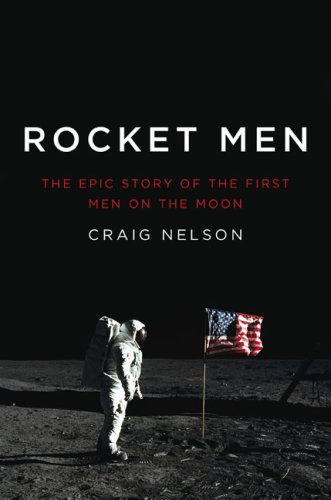
Rocket Men-Craig NelsonRocketMen

Source: Bought copy

Publisher: Viking Press

Publication Date: June 30, 2009

First on the list is Rocket Men by Craig Nelson, a biography of the United States space program, culminating in a description of Apollo 11, the first manned mission to the moon.  From the closing days of the Second World War, Nelson traces the history of manned space flight to NASA’s defining achievement of a man on the Moon.  It’s a fascinating look at the race between the United States and the Soviet Union, one in which the Soviet Union took an early lead and the United States focused their efforts to catch and surpass their cold war foes, eventually culminating in the Apollo program.  I’m only about half way through but find myself captivated by his account of the formation of NASA and their counterparts in the Soviet Union.  I feel confident in recommending Nelson’s biography of the program (after all, I already know how it ends) for anyone who has an interest  in the subject.  Looking around on the internet, Nelson has been criticized for a few technical errors in his account, but, like most of the populace, I’m not a rocket scientist and a few quibbles do not detract from a wonderful account of the early days of space-flight.

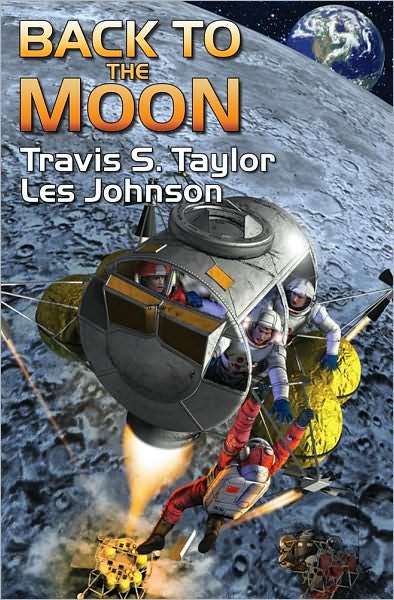
Back to the Moon-Travis S. Taylor and Les Johnson

Backtothemoon

Source: Bought copy

Publisher: Baen Books

Publication Date: December 27, 2011

Back to the Moon is a nice piece of speculative fiction by Les Johnson and Travis Taylor, who also wrote a neat novel (with John Ringo) about the invasion of Earth by a multitude of Von Neumann machines in the 2008 novel, Von Neumann’s War. Back to the Moon tells the a story of the near future in which the United States has finally refocused the mission of NASA on returning to the Moon.  Using a modified vision of the Constellation Program, the United States has once again embarked on a manned moon mission, but they have competition from the private sector in the form of a Virgin Galactic inspired space-plane/lunar orbiter by the name of Dreamscape.  Gary Childers, president of Space Excursions, is an entrepreneur in the mould of Richard Branson and also interested in bringing the experience of space flight and lunar excursions to the common man (well, those who can afford the fee).  Space Excursions is also interested in beating NASA to the Moon, although they aren’t prepared for a landing.  Meanwhile, China has become the successor of the defunct Soviet Union and is also striving to beat the Americans back to the Moon.

When Childer’s Dreamscape vehicle manages to orbit the Moon in advance of NASA’s efforts, the pilot and civilian crew are astonished to receive a distress signal from a crew of Chinese Taikonauts.  They’ve beaten the Americans to the Moon using stolen technology (ironically, from both NASA and Space Excursions) but flubbed the landing.  Once discovered, it becomes a race against time for NASA to launch a recovery mission before the Chinese succumb to their circumstances.

Now I suppose naysayers could nitpick this novel by calling it a “rah-rah” America first bit of fluff, but I found it a fun, pulpy read.  Taylor knows his stuff, after all, he is an actual rocket scientist, and while I would never describe his work as “literary” in the classical sense, he tells a compelling story in an accessible manner.

Adrift on the Sea of Rains-Ian Sales

Adriftontheseaofrains

Source: Bought copy (Kindle)

Publisher: Whippleshield Books

Publication Date: April, 2012

Adrift on the Sea of Rains, is the first in a quartet of proposed novels by U.K. novelist Ian Sales and can be characterized as both speculative fiction and alternate history.  It concerns a group of astronauts who become stranded on a lunar base after a nuclear exchange by the Soviet Union and United States.  Their only hope for rescue is a salvaged Nazi Wunderwaffe, a “torsion-field” generator that can allow them passage through alternate universes, in hope of finding one where the Earth has not been destroyed.  Complicating their situation is the problem of how to get home in the event they find an Earth to return to.

Now in all honesty, I haven’t read this book yet.  It’s on my intent to read list, but having perused the first chapter, I have little doubt that it’s going to be a compelling, although possibly dismal, novel.  Ian Sales appears to have taken a more literary road with regard to his writing style and it shows. His characters are maudlin (granted, you would be too if you’d witnessed the destruction of the Earth and faced a slow death on a desolate rock) and somewhat nihilistic. He’s also managed to win the 2012 BSFA (British Science Fiction Award) for short fiction.

I realize I’m not doing justice to his novella in this brief description, but want to inform you of a talent that has recently come upon my alternate history radar.  I hope to give you a more detailed report once able to spend some time with what appears to be an emerging talent.


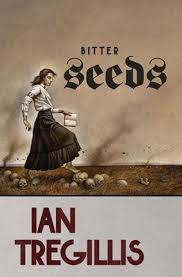
Bitter Seeds–Ian Tregillis

Bitter Seeds

“The price has been negotiated.  It will be paid.”

“The Hell it will!  Tell it to sod off.”

“My friends.”  Will spoke in a rigidly neutral tone.  The strain of maintaining his composure and concentration showed in the beads of moisture on his forehead.  “One does not renege on these negotiations…At best we can control the circumstances of the payment.”

At the dawn of the 20th century, many nations looked toward the creation of a superior human through the study of eugenics, a scientific pursuit that was taken to horrifying extremes under the Nazi regime during the 40’s.  In pursuit of the Übermensch, physicians such as Joseph Mengele became notorious for their barbaric experimentation and disregard for human life, while Adolf Hitler’s attitude towards race and racial “purification” (aryanization) directly led to the Holocaust and the genocide of over six million Jews by war’s end in 1945.  Once the atrocities of the camps were exposed to the wider world, the concept of eugenics fell out of favour with the world community.  Ian Tregillis’ Bitter Seeds is the story of an alternate 20th century in which the Nazi’s were successful in bringing about the Übermensch and placing England in such desperate straits as to delve into forces both unnatural and malevolent to counter their Nazi foes.

While on a mission to extract a German defector from Franco’s Spain during the Spanish Civil War, Lieutenant-Commander Raybould Marsh of the S.I.S. (Secret Intelligence Service) witnesses something beyond his ability to comprehend when his contact spontaneously combusts right before his eyes.  All that’s left of the informant’s belongings are some charred papers and the remnants of a remarkable, almost unbelievable film.  Once the film is reconstructed, it shows German test subjects purported to be exhibiting paranormal abilities.  One subject seemingly walks through walls, another crushes objects with his mind and yet a third demonstrates the ability to create and shape fire to his purposes.  Yet it is a young woman who bears no obvious outward manifestation that will prove to be the most dangerous weapon of this Nazi arsenal. 

Once the war begins in earnest, this group of Wunderwaffen prove their worth, forcing Marsh and his mentor in the secret service, John Stephenson, to enlist the help of Marsh’s college friend—and Warlock—Lord William Beauclerk.  Together, they assemble a unit (code-named Milkweed) comprised of Britain’s foremost magical talents to “negotiate” with otherworldly presences known as Eidolons to assure the safety of the home countries.  However, the assistance of these demonic forces comes with a price—a blood price—that quickly escalates as England’s situation deteriorates.  Beyond the physical blood price is the spiritual one as these patriots commit reprehensible acts upon their own countrymen to secure the continued cooperation of their supernatural allies.  As the novel goes on, the British find themselves in a morally suspect situation, and Will begins to suspect that the price of victory—even to stop the evil that is the Third Reich—may not be worth what they’ve sacrificed, both physically and spiritually.  The morally dubious English alliance with Stalin’s Soviet Union that in reality allowed an allied victory is in this alternate history replaced with a morally bankrupt alternative in the form of the mysterious Eidolons.

Bitter Seeds is a wonderfully well written novel.  It’s also incredibly dark and depressing, especially as the reader slowly realizes the depths to which the ostensive “good-guys” will sink in their moral corruption.  The actions of the British Warlocks stretch the meaning of the phrase, “the enemy of my enemy is my friend,” to incredulity.  Without giving away any spoilers, the price to be paid for each victory “negotiated” with the Eidolons is an assault on the basic morality of otherwise honourable men.  The novel poses the question of whether or not the ends can always justify the means.  What price would you pay; what heinous actions would you undertake, in the name of the greater good?  Could you kill a child if it would end the war?  How about two?  Or twenty?  Who decides what the greater good is or what price is acceptable, especially if one’s essential morality is lost in the process?  

Of the characters in the novel, it is somewhat ironic that Will, the facilitator of the Milkweed project, is the only character to stop long enough to examine himself and his motives.  He begins the novel as a patriot who wants to do something for his country and as a byproduct impress his brother, and further to be seen as something more than an aristocratic fop.  Later, he comes to question the road they’ve travelled and the price of his actions.  Marsh is a less introspective character, beginning the novel as the good son, modeling his career on that of his adoptive father (the aforementioned John Stephenson, a patriotic yet cold and cunning man) and slowly losing his moral compass as tragedy envelops his family and in his desperation to foil the Nazi Übermensch.

Surprisingly, Tregillis gives us a well-rounded depiction of the Nazi super soldiers, from the principled Klaus to the amoral Reinhardt, the sympathetic simpleton that is Kammler and the self-conscious Heike, and of course, the inscrutable Gretel, to whom everything and everyone is a pawn in a game only she comprehends.   The novel also focuses on small scenes while allowing the greater historical events to fall into place as the stage in which their story plays out.  The greater events of the war, such as the Dunkirk evacuation or operation Sea Lion are mentioned merely as background, but a raid by British forces through supernatural means on the farm that acts as a base to the Übermensch takes up a good portion of the narrative.

Credible world-building is an essential factor in the creation of a believable fantasy novel, even more so in the case of an alternate history, and Tregillis manages to successfully interweave fantasy and science fiction into what would otherwise be categorized as an alternate history novel.  All the essential elements of alternate history are there, twisted into his vision of what might be if the element of fantasy is added.  Dunkirk ends quite differently due to the addition of the Übermensch and their far seer, while the invasion of England is forestalled not by the natural vagaries of the weather (as in reality) but by the mystical wall of nature created by the Eidolons.

I cannot stress enough how very much this is a novel structured around the examination of morality and the horrors that occur when ones moral code is compromised.  Will recoils in horror and devolves into madness as he realizes the evil he has unleashed into the world may be worse than the one they are fighting, while Marsh degenerates from a principled patriot into an obsessive who allows revenge to overcome his principles.  It becomes a matter of the ends justify the means to Marsh, while Will continually questions whether or not they have unduly compromised their humanity.

Bitter Seeds left me with a feeling of profound sadness. I allowed Ian Tregillis to create an empathy in me towards the majority of his characters (yes, even the Übermensch) and then watched them devolve into morally bankrupt shells of their former selves.  Tregillis also left me with an unrepentant desire to continue reading of their decline—or possible salvation—in the next book of the Milkweed triptych, The Coldest War.

B+

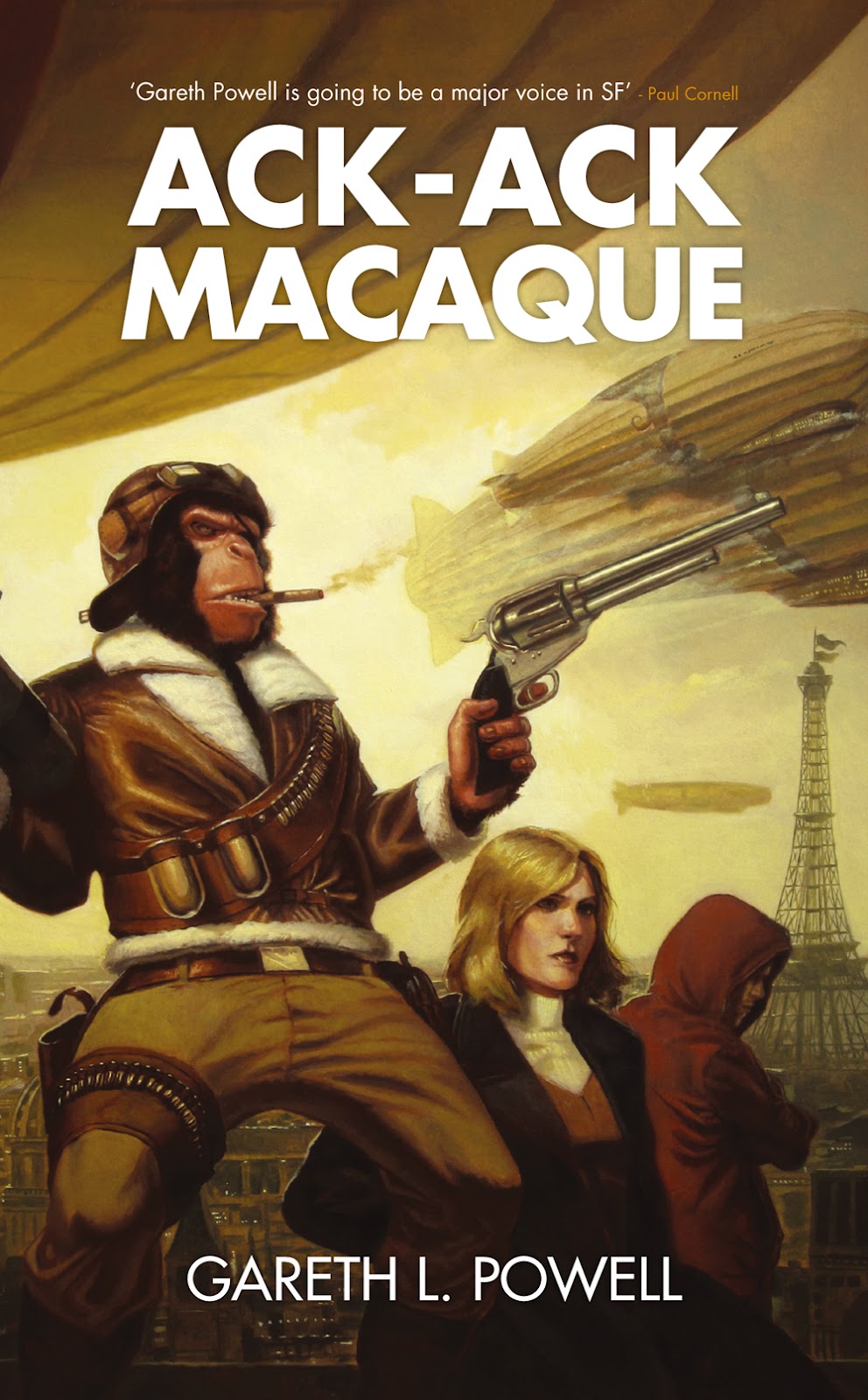
Ack-Ack Macaque–Gareth L. Powell

AckAckMacaque“Do you know what you have to do?”

Ack-Ack Macaque grinned, exposing his teeth.

“Same as I always do, right?”  He snapped the reloaded Colt back together and spun the barrel.

“Blow shit up and hurt people.”

Last week, as I sat on a picnic table during a break at work, a co-worker strolled by and saw the title of my latest read, Ack-Ack Macaque, at which point he derisively exclaimed, “Ack-Ack Macaque?  What the hell is that?”  My reply was oh so very NSFW (not safe for work) and involved a bad pun about sucking “Macaque.”  We both groaned at that lame response and went about our business.  I’m not relating this story just to prove my ability to come up with horrible puns, but that little incident made me think about how we choose the books we choose to read and how sometimes it simply comes down to a good cover or an amusing title.  Frankly, the title Ack-Ack Macaque was what prompted me to read the back cover of Gareth L. Powell’s futuristic novel about a monkey flying ace with attitude.  I’ve always been fascinated with flying and fighter pilots—throw in a monkey and some German ninja parachutists—and you have something I just HAVE to read, even if it turns out to be ridiculous.

And then something funny happened—and I don’t mean, funny “ha-ha.”  Here I was, reading a book with a monkey in a flying cap wielding a couple of six-shooters on the cover and discovering a book that was more William Gibson than Terry Pratchet.  So, a quick synopsis:

Set in the year 2059, Ack-Ack Macaque is in reality three intertwined stories that merge into one narrative by the climax of the novel.  The first story is that of Victoria Valois, a former correspondent recuperating from an accident which resulted in the majority of her brain matter being replaced by a synthetic version known as “gelware.”  She’s come to London to bury her estranged husband, and possibly investigate the unusual events surrounding his death.  Not only was Paul murdered, but during the course of the crime the culprit removed his brain, and with that, his soulcatcher, a piece of hardware implanted in every citizen to create a recording of their personality that lives on for a short time after death.  After coming face to face with the killer—and in the process having her own soulcatcher stolen (kidnapped?)—Victoria discovers that Paul’s death is in some way connected with his employer, Céleste Industries.

The second story involves His Royal Highness, Prince Merovich, the Prince of Wales and heir to the throne of the United Kingdoms of Britain and France—the two countries having been merged for a century—who gets tangled up with the illicit activities of his girlfriend Julie.  She’s a rights activist, and with a small cohort of friends, they are about to raid Céleste Industries in the hopes of freeing what they believe to be the first sentient artificial intelligence, that of a pistol packing, spitfire flying, whiskey drinking Macaque by the name of Ack-Ack who is the central character of an on-line virtual reality game.  Merovich is crucial to Julie’s plan, by way of his being the son of Céleste Industries owner, her Grace Alyssa Célestine, herself Regent of the combined commonwealth due to a terrorist act that left the King incapacitated.  Merovich also has a connection to Valois in the shared accident that resulted in her augmentation.

The third story is of what—or rather who–Merovich and Julie find when they infiltrate the facility.  I think by now you may have an idea about who that might be.  Together, they uncover the sinister plot of a cult known as the “Undying” involving androids, the first terraforming probe to Mars and possibly the end of the world through nuclear annihilation, unless Victoria, Merovich, Julie and a seriously pissed off macaque named Ack-Ack can find a way to stop them.

With Ack-Ack Macaque, Powell has proved himself an adept world builder, creating a convincing near future world in which the idea of a sentient monkey is not so far-fetched, which, to my mind is a pretty tall order.  He’s also added Steampunk elements to an alternate history novel that is not necessarily Steampunk, but will appeal to fans of the genre.  The ubiquitous skyliners (modified zeppelins) are there, but updated to be more demonstrative of real world technology.  No steam–all nuclear, and a realistic look at the direction technology can take us.  Artificial intelligence, huge leaps in medical technology, the idea of a back-up consciousness housed in a cranial hard drive, seamlessly blended into the background of a world that could very well be mistaken for our own—just projected another fifty years or so down the road.  The idea of a history in which France and England merged into a larger commonwealth with a shared monarchy does not seem an unrealistic possibility either.

As for the characters, Powell manages to capture Victoria Valois’ frustration and determination in the face of what was a debilitating accident, and her dogged resolve to solve Paul’s murder and bring the culprits to justice.  Merovich is a smart, yet somewhat naïve young man, rashly allowing his girlfriend to lead him into situations that an older man might think twice about, but with the wisdom to recognize when the situation calls for a more serious approach, likely the result of his experience in the incident that maimed Valois.  Julie comes across as a true believer with her own rigid moral code, willing to risk her own safety to free an independent intelligence that may only exist on a flash drive, while Ack-Ack—well, let’s just say he’s got a mean disposition and a very good reason to want to blow some shit up.

Actually, there’s more to Ack-Ack Macaque than just a grumpy monkey.  Here’s a character that has to contend with the knowledge that everything he’s ever accomplished, the people he has cared for, are simply part of a computer simulation.  In other words—he has to deal with knowing his life has been a lie.  In learning the truth, he’s also been set free to pursue bloody vengeance against those who treated him as a toy.

If there’s any complaint to be had with Ack-Ack Macaque, it’s that we don’t really get to see the villain fully fleshed out.  It’s evident early on in the novel who their common foe is, but without a narrative from the villain’s point of view, I found myself wanting to understand their motivation a little better.  The opponent is mentioned many times and the protagonists deal with the villain’s minions on several occasions, but when the reader finally meets the antagonist, it’s so brief they feel like a plot device rather than an important character.  Having said that, this lack of motivational description doesn’t detract from the novels best features, namely a bunch of wounded characters (literally and figuratively) pressed together by circumstance to accomplish the same goal.  You know—saving the world.

A-

Gareth L. Powell is the author of Ack-Ack Macaque and its forthcoming sequel Hive Monkey.  He maintains a website at www.garethlpowell.com and both Gareth and Ack-Ack Macaque can be found on twitter, engaging in hilarious conversations.

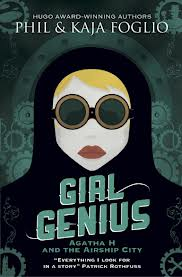
Girl Genius: Agatha H and the Clockwork Princess–Phil and Kaja Foglio

GirlGenius2“It’s ‘over.'” She snorted. “You speak like a child.  The Baron’s people will be back, or if not, there will be others like them.  You must be ready!”

Agatha looked at her angrily. “What makes you say that?  It’s a perfect plan.  They think I’m dead!”

“There is a serious flaw in this ‘perfect’ plan of yours…you’re not really dead now, are you?”

Beginning shortly after the events of Girl Genius: Agatha H and the Airship City, Girl Genius: Agatha H and the Clockwork Princess chronicles the story of our titular heroine, Agatha Heterodyne, and her feline familiar Krosp 1, (Emperor of Cats) Krosp1as they flee the forces of Baron Klaus Wulfenbach across the Wastelands of Europa. The Baron, essentially Emperor of Europa, has quite the history with the Heterodyne brothers and wants to keep any offspring of his former rivals under his thumb.  Agatha is also fleeing the attentions of the Baron’s heir apparent, Gilgamesh, who is not only the son of her nemesis, but a possible suitor.  Having recently learned she is heir to the Heterodyne dynasty, Agatha is headed for Mechanicsburg, the ancestral home of the Heterodynes, in hopes of finding answers regarding the disappearance of her parents and uncle.

The land across which she is fleeing is called the Wastelands for a reason.  A hazardous place, it’s full of nasty surprises, the result of various experiments and previous wars by some of Europa’s most gifted—and craziest—Sparks.  Abandoned—but otherwise functional and deadly—war machines roam the forests, as do various unnatural creatures, hiding in wait to scoop up the wayward traveller as a snack.  Anyone traversing the Wastelands spends most of their time fighting off the various dangers along the way.  Owing to a bit of luck, Agatha and Krosp come across Master Payne’s Circus of Adventure, a travelling road show of various performers and artisans, plying their trade from city to city and banding together for safety while on the road.  Realizing that a Circus would be a good way to keep both her anonymity and security, Krosp and Agatha join the circus after proving their worth, Agatha, by virtue of her natural affinity for all things mechanical—she is a Spark, after all—and Krosp by merely being a talking cat.

Within the travelling circus, they soon meet a series of interesting characters, such as the vain and talented actress Pym; Abner, Pym’s paramour and right hand man to Master Payne; and Lars, circus hand, reluctant hero, and possible love interest.  Agatha also meets the dour and decidedly dangerous Zeetha, a warrior princess of the lost city of Skifander, and soon is taken under her wing to learn the warrior skills she never needed while working in a lab, but definitely does in the real world.

There’s still the problem of Gilgamesh’s pursuit, but the members of Master Payne’s Circus of Adventure are nothing if not inventive, and masters of misdirection.  One faked death later, and Agatha is out from under the scrutiny of the Wulfenbachs.  During the course of their journey, Agatha manages to gather a following in the form of three Jagermonsters, sworn protectors of the family Heterodyne.  Jagermonsters are Hyde like creatures—formerly human—who use their superior strength and martial prowess to keep their lady from harm.  They’ve also been looking for the Heterodyne heir for the past ten years, and when they find Agatha, become her self-proclaimed heroes.

Agatha also proves herself to be a natural actress, playing the role of Lucrexia Mongfish (Bill Heterodyne’s wife) in many of the Heterodyne Brothers plays put on by the roadshow to entertain locals in the various cities they travel through. Luckily, a lot, if not all, of their plays revolve around the Heterodyne brothers and their various quests to save the townsfolk of the realm from unhinged Sparks and their nefarious creations. Unbeknownst to the other players, Agatha is the long lost daughter of Lucrexia, making her acting all the more believable.

The story comes to a head with the arrival of the circus at the stronghold of Sturmhalten, the ancestral home of the Sturmvaraus family.  The present rulers of Sturmhalten, Tarvek and Anevka—the titular Clockwork Princess–recognize the potential in Agatha to further their own dark designs, and take Agatha captive at the first opportunity.  From there, it’s up to Krosp and the members of Master Payne’s Circus of Adventure to rescue Agatha—before the forces of Baron Wulfenbach descend upon Sturmhalten and take her back into custody—and before Agatha succumbs to the will of the most malevolent being to have ever threatened the people of Europa—a.k.a. THE OTHER.

ggGirl Genius: Agatha H and the Clockwork Princess reads much like an old-time serial, those weekly installments of great classics like Flash Gordon one might see at the theatre week by week.  Understandably so, since Girl Genius is based on the serialized web comic by Phil and Kaja Foglio.  It’s extremely entertaining to be able to flip back and forth between comic and book to compare one’s inner conception of the various characters with the author’s own visuals.  This sequel also helps to flesh out a bit of the back story behind the events of the first novel.  However, it is useful to have the Girl Genius Wiki on hand, as the sheer number of characters can make for confusion.

With this second volume, we also discover some interesting aspects of the Heterodyne family—namely that until Bill and Barry changed their image, the Heterodynes were feared throughout the realm and generally regarded as the worst of a bad bunch.  Hence the instinctual fear everyone seems to have when confronted with the terrifying visage that is your average Jagermonster.  (Note to readers: Jagermonsters are my favourite!)

One notable aspect of both Girl Genius novels is the demonstration of a number of strong female characters, ranging from Agatha herself, a young lady plunged into a situation in which she has to rely on her natural talents, to Zeetha, the lonely, yet dangerous warrior woman, and extending to some of the more villainous characters.  Even the OTHER, the epitome of villainy in this Steampunk world–is a female.

There’s also a strong comedic element to the story, usually embodied in Agatha and her reactions to new experiences, or the comedic relief of her feline familiar.  Sometimes bawdy, sometimes slapstick, there is generally a lot of humour to counterbalance the darker aspects of the characters experiences as they move through a world that hides danger around every corner.

The biggest drawback to this novel is that it’s so very, very, looooooooonnnngggg!  Granted, Girl Genius is translated to print from the web comic and comic story arcs can last for years, but at 590 pages, the novel could be a strain on the attention spans of younger readers.  Honestly, this novel wouldn’t suffer a bit if they had cut out a hundred pages (at least), and I wonder if their intended target audience–bear with me, I’m assuming young teens–would be willing to invest so much of their time. The Foglio’s previous novel topped out at a more manageable 300 or so pages.

Agatha H and the Clockwork Princess is a lot of fun, although it seemed to take forever to get through.  The payoff is well worth it though, and I do hope to see further print installments of the series.  That, I imagine, will depend on how well the first two books of the series sell.  Agatha’s story has barely begun—and I know I’d like to read the rest of it.

Girl Genius: Agatha H and the Airship City–Phil and Kaja Foglio

Girl Genius

“But I don’t have the Spark. I seem to have the opposite.  Nothing I build even works.”

Krosp sighed in exasperation. “What do you think you DO at night?”

Agatha looked wary. “I don’t know. I’m asleep.  What do I do at night?”

‘You build things.”

“But there’s never anything there when I wake up.”

Krosp folded his arms.  “”They always run away.”

Agatha Clay (or is it “H”?) is a frustrated teenager. Essentially an orphan, she lives in the care of Adam and Lilith, friends of the family who promised her uncle years before that they would care for her while he was away. It’s been eleven years and counting.  They’re also “constructs”, the result of some mad scientist (and there are many in Europa) finding a needle and thread and some body parts to stitch together.  A student at the Transylvania Polygnostic University, Agatha works as a lab assistant to the Tyrant of Beetleburg, the aptly named Dr. Beetle.  Yet try as she might, none of her experiments ever work out.  Create a clank (mechanical construct) and it falls to pieces within a few steps.  Try to apply her mind to a problem; the result is splitting headaches.  In a world lit by Sparks–I’ll get to that in a minute–Agatha’s light is much diminished.

It’s especially hard to shine in a time when those that have an almost magical ability to wield science–the aforementioned “Sparks,” create a multitude of wonderful, and sometimes dangerous, constructs.  When the construct is flesh and blood, you end up with her ersatz parents, or the monster soldiers (Jagermonsters) that patrol the streets of Europa.   When it’s mechanical, you end up with Mr. Tock, the giant clank that guards the front gate of the University.  Agatha yearns to fulfill her potential, but fails miserably every time.

A brief word about Sparks: generally, their talent for all things scientific manifests itself at puberty and can be quite disconcerting.  Some go crazy.  Others are just a bit odd, hence the moniker “Madboys” that gets tossed around in any discussion of a Spark.  Being a Spark is a dual edged sword.  They are generally capable of great accomplishments; however, those accomplishments more often than not wind up killing them.

On her way to school one morning, Agatha is waylaid by a couple of destitute soldiers, one of which steals her necklace.  The locket attached is irreplaceable, containing the only picture of her parents she has.  Late to the lab and rightly upset, she discovers that the Tyrant’s Tyrant, Baron Klaus Wulfenbach, has made a surprise visit to the university, bringing with him a cadre of soldiers and a righteous anger.  Years before, a villain known as “The Other” terrorized Europa, wiping out various members of the Spark gentry and enslaving their subjects before disappearing around the same time as the legendary Heterodyne Brothers, two Sparks famed for their ability to take care of just that sort of problem.  The means by which the Other subjugated the people were known as Slaver Wasps, mechanical insects that sprang from Hive Engines to either kill or enslave the populace.  Dr. Beetle has managed to find a dormant hive and in a moment of incredibly bad judgment, tried to keep knowledge of it from Wulfenbach.  Next you know, Dr. Beetle is dead, the town is occupied by the Baron’s troops, and Agatha has been dismissed from the university.

Distraught after this series of unfortunate events, Agatha retreats back to her foster parents and retires for the night. She’s always been a restless sleeper, dreaming of all the things she wants to build.  The next morning Agatha wakes to find that a clank the size of a steam tractor—perhaps formerly the steam tractor Adam was overhauling–has rampaged through town and brought both the Baron and his son Gil–accompanied by a mob of Jagermonsters–to her doorstep.  Even worse, one of the thieving soldiers has dropped by, wanting to know why his brother died after handling her locket for less than a day.  As for the Baron, he’s excited at the prospect of harnessing the power of a new Spark, and before anything can be sorted out, both Agatha and the soldier have been gassed and whisked away to the Baron’s stronghold.

When Agatha awakes, she’s informed by Moloch (the soldier) that they’re hostages on the Baron’s Airship City, and that Wulfenbach has mistaken Moloch for a nascent Spark.  Moloch knows the truth of Agatha’s abilities and needs her to play the role of his assistant while they find a way to escape.  As for Agatha, she’s beginning to realize she can create things that actually work, that the headaches accompanying her attempts at concentration have disappeared, and that she’s in a lot of trouble.

Gilgamesh Wulfenbach, heir apparent to his father’s tyranny, has taken notice of her.

From there it’s one adventure after another as Agatha explores the floating city, meeting its many denizens, malevolent and benevolent alike, trying to keep her secret from the Baron while looking for a way to escape his clutches.  Luckily, Gil seems a bit smitten with her and wants to encourage her development, even if it’s just to spite his father.

***

I’ll grant this description doesn’t live up to the contents of Girl Genius: Agatha H and the Airship City, but it’s a daunting book to describe.  I’ve omitted a lot in my brief synopsis because there’s simply so much going on that it’s impossible to encapsulate everything in a few paragraphs.  Luckily, there’s a Girl Genius Wiki online to keep everything straight.

Clearly a Steampunk novel with great aspirations, Girl Genius is based on the Web comic of the same name by Phil and Kaja Foglio.  When first sitting down to read it, I worried that Girl Genius was going to be a  Harry Potter knock off, what with the main character being a student at a school for gifted children in a land divided into those who are normal and those who possess a special talent, this time an innate talent for science rather than magic.  However, aside from the fact that she’s a university student and that magic has been replaced by science, there are very few similarities between the two novels.

Actually, that’s both true and untrue.  The more I think of the Other who disappeared years ago after wreaking havoc on the realm, the more I see the comparison to Voldemort of the Potter series.  However, the story of a girl taken from her home and plunged into a strange and wondrous world begs comparison to Baum’s Dorothy and the Wizard of Oz, although in this case, the world seems filled with tin men.  Once I got beyond the inevitable comparisons, I was able to sit back and enjoy a thoroughly entertaining tale.  The Foglio’s have done a bang up job of creating their own Steampunk universe and inhabiting it with various interesting and unique characters.  My personal favourites were the Jagermonsters, an army of Hydes (of the Dr. Jekyll variety).  Ferocious and intimidating, they are also endowed with a certain childlike charm.  They also add a nice bit of comic relief, even in situations that wouldn’t normally seem to warrant humour.

Is this a young adult novel?  That’s a hard question to answer, as some of the scenes are (from the perspective of this forty year old) somewhat racy, although there’s really no more hanky-panky than a stolen kiss.  It’s definitely not limited to teens, being a fun filled romp for anyone with a predilection towards the Steampunk genre.

Fair warning: Agatha H and the Airship City is certainly not meant to be a self-contained novel.  Rather, it’s more of a prologue to a larger story, introducing the main characters and the world they inhabit without resolving the greater issues introduced.  Where are Agatha’s parents?  What of the legendary Heterodyne brothers and the mysterious Other that once terrorized the realm?  Why are the Jagermonsters so obviously smitten with Agatha?  Why does Agatha seem to be so important to everyone around her?  These are a few of the questions that will hopefully be addressed in the sequel: Agatha H and the Clockwork Princess.  This teaser novel has definitely got me hooked.

B+

Memories of Futures Past

“To the Moon, Alice!”

Ever wanted to read some classic Science Fiction yet been unable to find a copy of your favourite author’s work?  I myself have been fruitlessly looking for a copy of E. E. “Doc” Smith’s Lensmen series for a while now.  Or, say you’re a fan of Murray Leinster.  His works are out there, but few and far between.

Well, someone’s decided to make sure that visions of future past don’t disappear into history. The good people over at engadget have a nice little profile of a bookstore in New York (Brooklyn to be specific) whose proprietors have dedicated themselves to bringing lost and out of copyright Science Fiction back into the mainstream.

Singularity&Co have dedicated themselves to:

Save the SCIFI!

Singularity&Co. is a team of time traveling archivists longing for futures past. 

Each month, our subscribers help us choose a vintage, out of print scifi book to rescue (with the rightsholders’ permission).  We’re bringing forgotten 20th century scifi into the 21st.

They’ve dedicated themselves to scanning rare and classic Science Fiction books into a digital format and then releasing them as ebooks.  If you’re an  aficionado of classic SciFi, these are the people to watch!

(Thanks to Mat Smith at engadget)

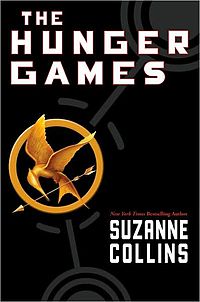
The Hunger Games–Suzanne Collins

The Hunger Games, first in the trilogy by Suzanne Collins, is the story of Katniss Everdeen, a teenage girl living in a community known as District 12, one of a dozen that make up the country of Panem.   Panem itself is a future version of North America, ravaged by war and natural disasters, a dystopian society set in the near(ish) future.

It is a society of haves and have-nots, the haves populating what is simply known as the Capital, the have-nots (or proletariat) inhabiting the rest of the country.  While citizens of the Capital have all the amenities that modern medicine and technology (and wealth) afford, those in the other regions live lives of mere subsistence, each district tasked with a distinct function by the central government.

Katniss and her family live in what was formerly called the Appalachians–coal country–and eke out an existence supplying the Capital with fuel.  Having lost her father many years before in a mining accident, Katniss has become a skilled hunter, supplementing their meagre supply of food with poached game and various nuts and berries, painstakingly collected day by day.  It is a life of fear of starvation and starvation, interspersed with the daily struggle to make sure the former does not become the latter.  Yet Katniss is content with her family, if not her situation, and shoulders the burden without much complaint. 

However, there is one other thing each district must supply the Capital.  Every year each district supplies contestants  for the spectacle which is The Hunger Games.

Inaugurated 74 years earlier after a failed rebellion by the Districts, the Hunger Games pit two teens (between the ages of 12 and 17, one male–one female) from each District in a battle royale with their counterparts from the others.  It is a battle to the death with only one possible “winner”.  Used both as a means to terrorize the populace and demonstrate their absolute authority, the government of Panem ruthlessly exploits the children to keep the people submissive.

When Katniss’ younger sister Prim is chosen for the games, she makes the choice to volunteer in her stead,  knowing that it’s a death sentence, yet willing to make that sacrifice for her kin.  Within days she and the male contender of District 12, the baker’s son Peeta, are whisked off to the Capital for a bit of training and a lot of promotion.  And then the games begin.

Dropped into an arena consisting of varied environments and climates, each competitor must rely on their wits and physical skill with (if they’re lucky) a weapon to eliminate the others.  They also have to make it a show–if things get boring, the gamemakers will “move things along” by either altering the environment in an unpleasant manner or introducing deadly obstacles such as mutated animals, flame throwers, etc.  Of course, without giving away too much, this is the story of Katniss and her time in the arena.

For a young adult novel, Collins has crafted a remarkably serious yet not overly graphic tale that manages to hold the attention of her market audience while appealing to those of us who fall into the category of adult.  Not just a story for kids, Collins manages to explore several complex themes: oppression vs. liberty; authority vs. non-conformity; proletariat vs. oligarchy, etc.

Her novel can have different meanings to the reader depending on your political persuasion.  A progressive might see it as the story of fascism stifling the free expression of the people, while a conservative might see it as an example of the intrusive nature of big government–the aforementioned liberty to live our lives without too much interference.  I think Collin’s intent falls somewhere in between–more of a cautionary tale of how easily society can be controlled once they cede authority to a small minority, and also a condemnation of today’s “reality television” society.

It’s also a ripping good read that doesn’t require a huge time investment–just an emotional investment in several appealing characters, knowing that not all will survive The Hunger Games.

B+

The Hunger Games vs. Battle Royale

With the movie forthcoming, it seemed time to read Suzanne Collins The Hunger Games, the story of a post apocalyptic society in which children are forced to fight to the death in an arena both as a way to assert control over the populace and entertain the ruling class.  Ruthless, yet endearing, it’s the story of Katniss Everdeen, the contestant from District 12 who volunteers in place of her younger sister knowing full well she’s signing her own death warrant.

However, this is not the first time a writer has addressed the idea of a dystopian society sacrificing their children to appease a government that rules the people, rather than being ruled by them.  Koushun Takami tackled a similar storyline in his 1999 novel, Battle Royale, which became a film in his native Japan in 2000.

I’ve been wanting to read this for a while and it seems a good follow on from The Hunger Games.  Has anyone read both?  If so, I’d love to hear your thoughts.  For now, here’s The Hunger Games trailer:


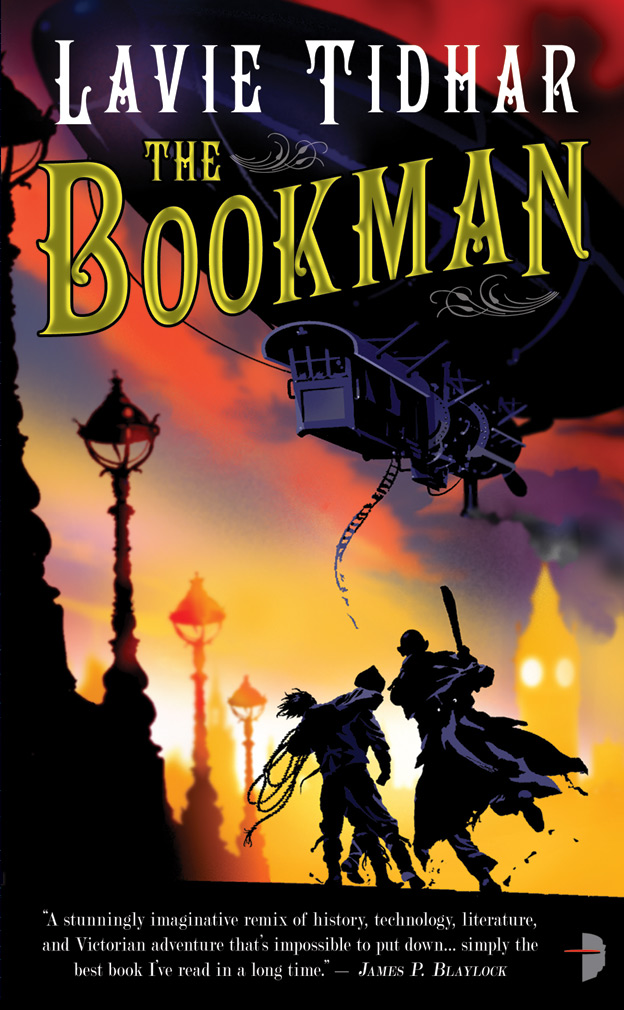
The Bookman–Lavie Tidhar

“A myth,” he said. “Oh Orphan. This is the time of myths.  They are woven into the present like silk strands from the past, like a wire mesh from the future, creating an interlacing pattern, a grand design, a repeating motif.  Don’t dismiss myth, boy.  And never, ever, dismiss the Bookman.”  ~Gilgamesh

Orphan is his namesake, living one step from the streets of what in any other age would be called Victorian England, but with the coming of Les Lezards and the subsequent fall of the house of Hannover, mad King George (the lizard) has the throne.  It is an age of wind and steam, man and automaton, order and anarchy, the last embodied in the form of a terrorist named, “The Bookman.”

When Orphan’s paramour Lucy is killed in one of the Bookman’s attacks, Orphan is devastated, but after an encounter with inspector Adler (Irene) and the Byron simulacrum, he learns that death may not be all there is, and that what small hope there is of recovering his beloved lies in running the Bookman to ground.  Barring that…vengeance.

There are many forces at play in his majesty’s empire: Prime Minister Moriarty and the Lizards; Mycroft Holmes’ shadow government floating high above London in their black airships; the Turk, an automaton among automatons who yearn for the translation, a device that they hope will make them equal to their fellows of flesh and blood; and of course, Orphan.  All believe the Bookman (or his death) holds the answer to their various problems and that Orphan is a tool to be wielded in that pursuit.

Yet when Orphan finally finds the Bookman, he is offered a choice.  Help his nemesis to stop Les Lezards from launching a device into space that may be mankind’s salvation (or doom) and Lucy shall be returned, hale and unharmed.  Don’t help, and Lucy is lost forever.  Really not much of a choice for a young man in love.

From the heart of Britannia to the depths of the Caribs, Orphan journeys on his mission, beset by danger and double dealings, culminating in one final meeting with the Bookman, which will either see Lucy returned to him or  the destruction of that which the Bookman covets the most.

The Bookman is everything one would want out of a Steampunk novel, blending both science fiction and fantasy, historical and fictional personages, all with a twist on the original source materials.  Irene Adler is now an agent of Scotland Yard, Moriarty is Prime Minister, and Jules Verne is both author and adventurer.  Lord Byron is a simulacrum, Karl Marx a revolutionary, and then there’s  Orphan, who has a greater role to play in the Empire than ever he could guess. 

Sometimes though, it felt as though the writing had a tendency to meander.  I spent a lot of time reading of Orphan wandering the streets of London moping about his lost love when (for my part) I’d rather just see the story advance.  It’s not really wasted narrative, but sometimes slowed the story to a crawl.  Tidhar also has a habit of skipping forward in the narrative and writing scenes in retrospective.  There is a moment near the end of the novel where Moriarty and Orphan come face to face…and next you know Orphan is on the run with no real explanation of what happened.  When it does get explained, what seems like it should be a pivotal moment simply comes across as trite.

There is also surprisingly little interaction with the lizards during the course of the novel, but the one time we meet one, it is a pirate named Wyvern, and he is entirely unforgettable.  More lizards please!

As for the Bookman and Les Lezards, when their background is finally revealed, I was pleasantly surprised to find that what was at first a fantasy novel had somehow morphed into science fiction with fantastical elements. 

The Bookman does leave a little too much unfinished by the end of the novel, but also leaves the reader (at least this one) with a desire to read more of Orphan’s exploits and to explore the Universe Lavie Tidhar has created.  Luckily for us, it is the first of a series of three, continuing with Camera Obscura  and the forthcoming The Great Game.  All in all, The Bookman is a wonderful novel and what minor flaws I’ve mentioned are just that– minor.

Lavie Tidhar maintains his own blog if ever you’d like to check out what’s new in his world.